New hires are slow because your instructions are unreadable
Not badly written. Unreadable in the practical sense: locked in a document library, written in one language, at a reading level that assumes the reader already knows the job.
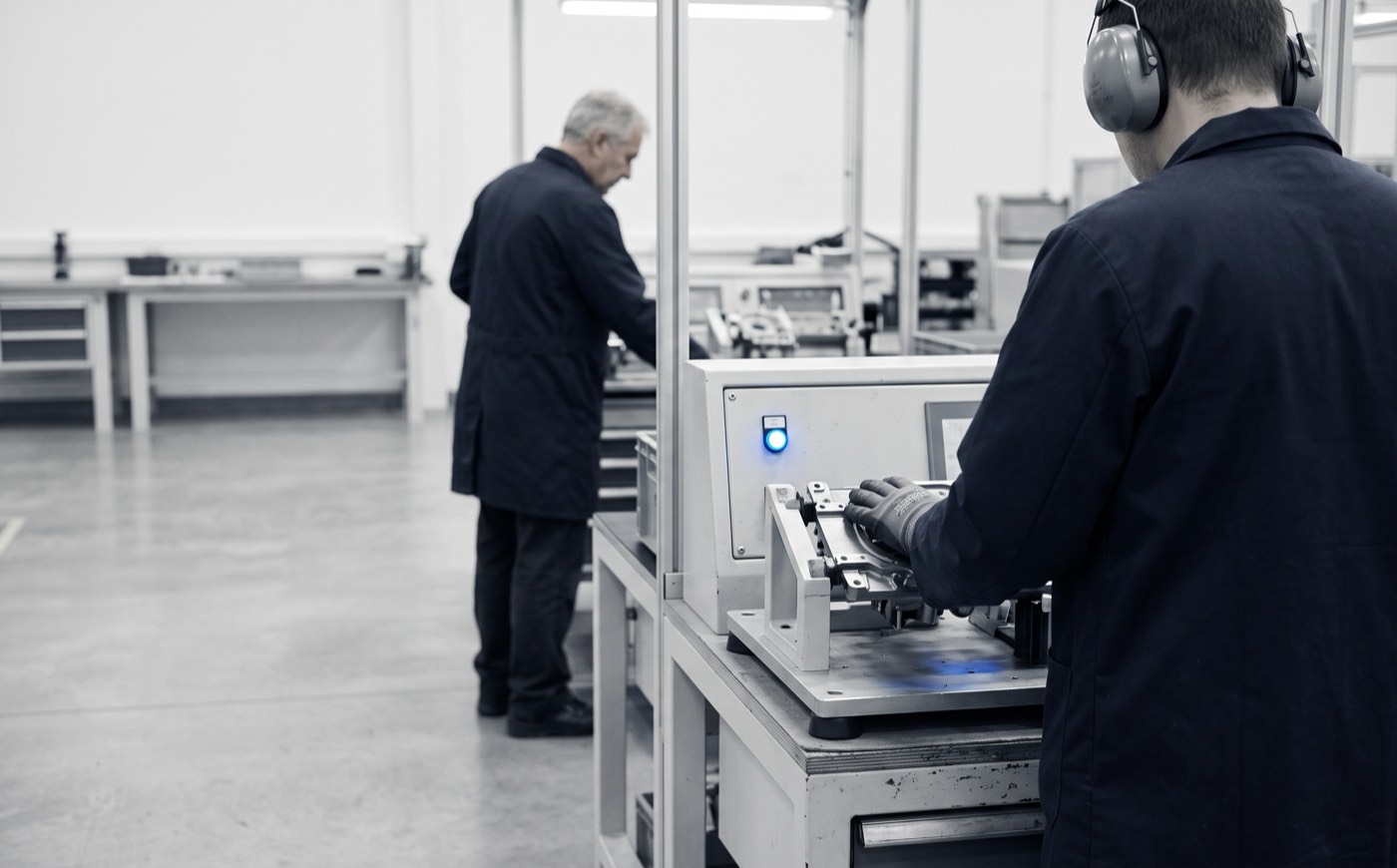
So a new operator does what anyone would do. They stop and ask the nearest experienced person. That person puts down their own work, walks over, explains, and goes back. Repeat this across a floor with high churn and you are paying your best technicians to supervise instead of produce.
Plants with rapid hiring cycles feel this hardest, because the coaching load never ends.
What Tandm replaces
The document library nobody opens at the station. The fragmented training applications that live away from the line. The unofficial system of tapping a senior operator on the shoulder.
The procedures themselves stay exactly as they are. What changes is how they reach the person doing the work.
How it works on the floor
The difference is where the guidance lives
Traditional upskilling asks a new hire to learn the process and the software that describes the process. Tandm removes the second job. The operator speaks, and the instruction comes to them, in their language, at the station, during the task.
Senior technicians get their shift back.
Built for plant leadership
Plant managers and manufacturing operations managers are measured on floor productivity, output against quota, scrap and defect rates, and how quickly a new hire reaches full productivity. Each of those is affected by how long a new operator spends unsure of the next step.
The strongest fit is a high-volume production or assembly plant with rapid hiring cycles and complex floor procedures.
Common questions
- Do we have to rewrite our SOPs?
- No. Tandm works from the work instructions and standard operating procedures you already have, including single-language documents, and delivers them step by step in the operator's language.
- Is this a training system?
- It is a coach on the line rather than a course in a room. The guidance arrives at the station, during the task, which is where new operators actually get stuck.
- What happens to our experienced operators?
- They stop being interrupted. The most common complaint from lead technicians is that coaching new hires costs them their own output. Tandm takes the repetitive part of that.
- How does it handle a mixed-language floor?
- Each operator works in their own language from the same source procedure, so one approved instruction serves the whole floor without a translation project.
- What can we measure?
- Time to productivity for new hires, scrap and defect rates on lines running new operators, and how much senior technician time goes to coaching rather than production.